
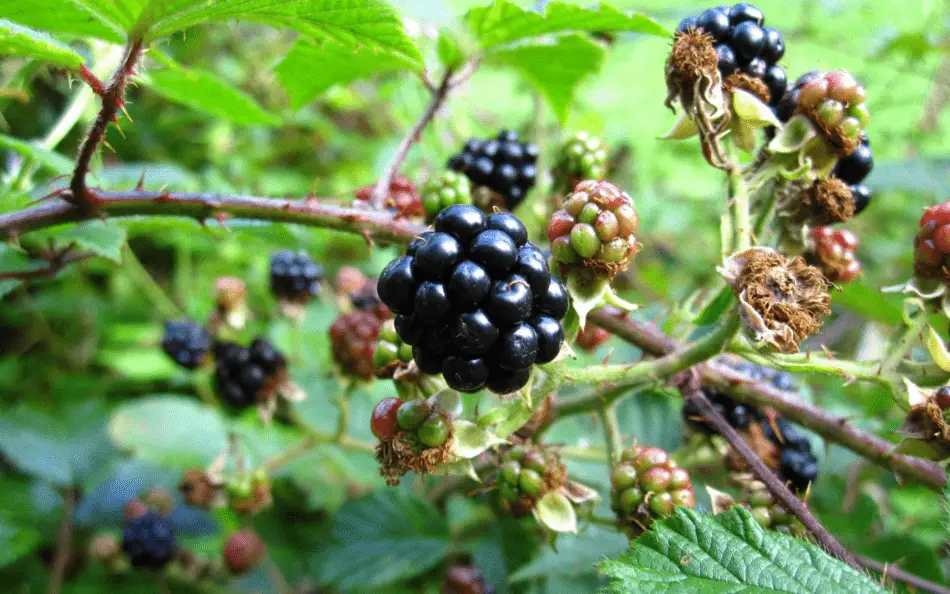
Blackberries are productive, perennial fruits that can yield harvests for 10–20 years when properly maintained.
To grow blackberries successfully, choose a sunny location with well-drained, slightly acidic soil, select the right variety (erect, semi-erect, or trailing), provide support when needed, and prune annually for maximum fruit production.
Here’s how to plant, grow, and harvest blackberries in your backyard.
Understanding Blackberry Varieties
There are three main growth types of blackberries. All are self-fruitful, meaning one plant can produce fruit.
1. Erect Blackberries
- Grow upright (3–6 feet tall).
- More cold-hardy.
- Some varieties are thornless.
They may stand on their own but often benefit from light support.
2. Semi-Erect Blackberries
- More vigorous growth.
- Higher yields.
- Require trellising.
3. Trailing Blackberries
- Long, flexible canes (up to 15–20 feet).
- Least winter hardy.
- Always require trellis support.
Choose varieties suited to your local climate.
Best Growing Conditions
Sunlight
Full sun (6–8 hours daily) is essential for fruit production.
Soil
- Well-drained soil
- pH between 5.5–6.5
- Rich in organic matter
Avoid planting where tomatoes, peppers, potatoes, strawberries, or eggplants recently grew, as they share similar diseases.
When to Plant Blackberries
- Early spring (best option in cold climates)
- Late fall (in mild climates)
Plant while canes are dormant.
Spacing Guidelines
- Erect varieties: 2–3 feet apart
- Semi-erect varieties: 4–6 feet apart
- Trailing varieties: 6–8 feet apart
Proper spacing improves airflow and reduces disease.
How to Plant Blackberries
Step 1: Prepare the Soil
- Loosen soil 8–10 inches deep.
- Incorporate compost or aged manure.
- Adjust pH if necessary using lime or sulfur.
Step 2: Plant the Canes
- Dig a hole wide enough for roots.
- Place crown level with surrounding soil.
- Backfill and water thoroughly.
Step 3: Install Trellis (If Needed)
A simple two-wire trellis works well:
- 8-foot posts buried 2–3 feet deep.
- Wires placed at about 2.5 and 4.5 feet high.
Tie canes loosely as they grow.
Watering and Fertilizing
Watering
- 1 inch of water per week.
- Increase during fruiting season.
- Drip irrigation preferred.
Fertilizing
- Apply balanced fertilizer (10-10-10) in early spring.
- Repeat lightly after harvest if needed.
Dark green foliage indicates healthy nitrogen levels.
Pruning Blackberries
Blackberries fruit on second-year canes (floricanes).
- After harvest, remove spent fruiting canes at ground level.
- Thin new canes (primocanes) to 3–5 strong canes per plant.
- Tip-prune erect varieties at 3–4 feet to encourage branching.
Pruning is essential for yield and disease prevention.
Harvesting Blackberries
- Harvest when berries are fully black and plump.
- Pick every 2–3 days during peak season.
- Berries do not ripen after picking.
Harvest during cooler parts of the day and refrigerate immediately.
Common Problems
- Gray mold (Botrytis)
- Raspberry borers
- Viral diseases (yellowing leaves)
Remove infected canes promptly and maintain airflow through proper spacing and pruning.
How Long Do Blackberry Plants Produce?
With proper care, blackberry plants can produce fruit for 10–20 years.
Expect light production in year one and full harvest beginning year two.
Final Thoughts
Blackberries are low-maintenance, high-yield perennial fruits that thrive in sunny backyards with good drainage and annual pruning.
Select the right variety, install support where needed, and prune consistently. With proper care, your plants will reward you with sweet harvests for years.