
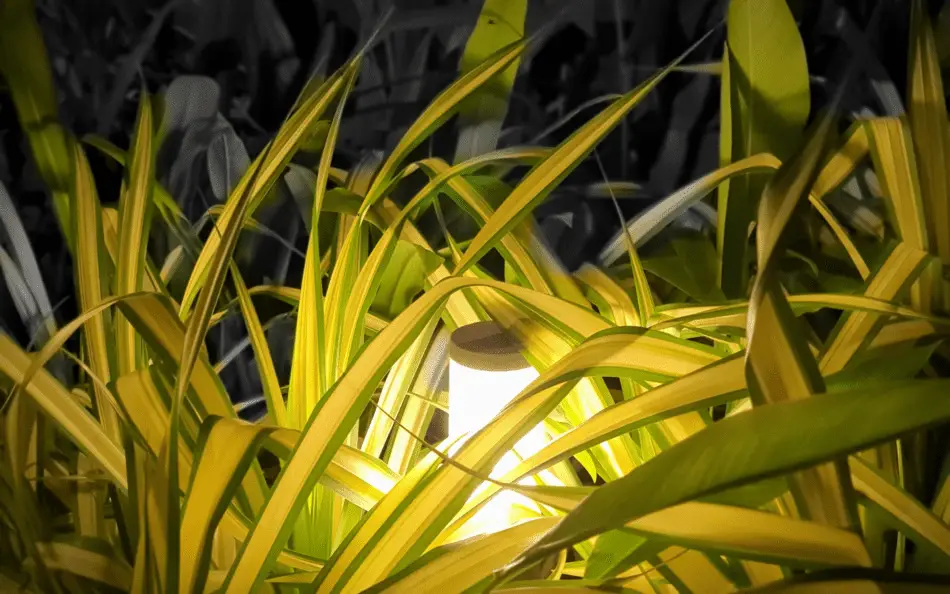
Lighting makes our property stand out when evening comes. It provides us with vision in the dark areas of the property and illuminates and sets the mood for our outdoor setting. While our ultimate objective is to create attractive, creative outdoor landscape lighting, one of the primary considerations is safety. So, what do you need to know about landscape lighting?
There are two voltage options for outdoor illumination: low voltage (12V) and line voltage (120V). Line voltage is the term used to describe 120V. This is the voltage that most households get directly, and it must be made by a certified electrician. Low voltage lighting employs a step-down converter to convert your home’s 120V electrical supply into 12V.
In this article, we will discuss landscape lighting. With this, we will differentiate low voltage landscape lighting and line voltage landscape lighting.
What Is Landscape Lighting?
Landscape lighting performs many functions. It provides the primary goal of illuminating your outside space but also comes with several advantages that both astound and delight homeowners.
Safety
Landscape lighting provides a sense of security. Illuminated areas where people can walk assure their safety since providing lighting on pathways and in stairwells reduces unplanned and dangerous falls. Lighting placed around the pool, patio, deck, and seating area will give ample illumination for safety.
Security
When anything or anyone activates the motion detector landscape lights, it turns on. Your lights will turn on whenever someone walks through your yard, which will provide your home with extra protection. The motion detector lights only turn on when they are engaged and may be strategically positioned around your home to dissuade potential burglars.
Appearance and Design
Landscape lighting may be used to draw attention to any part of your property. Adding beautiful landscape lights to various locations will turn them into focal points of your outdoor environment. The ornamental lights may be placed around plants, waterfalls, and sculptures, or anywhere else you want to draw attention to.
Landscape lighting provides warmth and attractiveness to your property. It will demonstrate that you are concerned about the aesthetic of your home while also enhancing the value of your property.
Additional Convenience
Your outside setting will be more comfortable with landscape lights. Homeowners may install lights around the patio and deck to enjoy the space after the sun has set. As property owners can sit and unwind during the night in a well-lit space, it will provide a sense of warmth as well as an attractive and pleasant atmosphere.
As previously stated, there are two voltage options for outdoor illumination: low voltage (12V) and line voltage (120V).
High voltage, line voltage, or standard voltage are all terms used to describe 120V, which is the voltage most households directly get. All 120V connections must be made by a certified electrician in most localities.
Low-voltage lighting, also known as 12V, employs a step-down converter to convert your home’s 120V electrical supply into 12V. Since the voltage level is substantially lower than a typical electrical outlet, this conversion makes your lighting system safe to install and maintain.
The safest option for powering your residential landscape lighting is 12V. A person can die if exposed to 120 volts. If you or a family member come into touch with the considerably lower 12V, you or they will only receive a little shock.
When there is a requirement to light large areas with a lot of light output, 120V outdoor lighting is most commonly employed in commercial or security scenarios. Meanwhile, 12V is the safer and better option for household landscape lighting.
If you want to improve the overall look and functionality of your garden or yard, you should consider landscaping. One thing that you should know about this process, though, is that it can be extremely pricey. Why is landscaping so expensive? Read our article to find out.
Low Voltage Vs. Line Voltage: What’s the Difference?
When talking about electrical safety, you must consider the significance of using the proper connectors. The lighting fixtures’ connections to the wire that leads to your power source must be secure.
Poor-quality connections will eventually break, resulting in a short wire meltdown or even a fire. Let’s look at the differences between the two voltages for outdoor lighting.
Low-voltage Landscape Lighting (12V)
The most common option for home outdoor lighting is low-voltage landscape lights. The fact that they are easier to install, inexpensive, safer, and don’t require you to be a certified electrician to deal with them are just a few of their benefits.
Since the wire doesn’t have to be grounded, low-voltage outdoor lighting reduces the risks of shock and is easily installed. There are also significantly more low-voltage landscape lighting fixtures, bulbs, wattages, and styles to choose from. Therefore, 12V landscape lighting is preferred and more popular than 120V outdoor lighting in most home applications.
The number of fixtures available and the quality of light produced at 120V are severely limited. However, 12V has a wide range of wattages, color temperatures, and beam widths to choose from. 120V just does not hold up as well as 12V. Due to the higher heat created during 120V operation, 12V light bulbs often live longer than 120V light bulbs.
Here are some key features of low-voltage landscape lighting (12V):
- Safe to use in moist environments.
- Installing it is both safe and unobtrusive.
- Safe to use in areas where children and pets dig, chew, and play.
- The cable does not have to be run via a conduit.
- Increases the number of lighting fixtures and bulbs available.
- The fixtures may be easily relocated when altering the landscape or performing house modifications.
- More stunning styles and alternatives to choose from.
- Cost-effective.
Line-voltage Landscape Lighting (120V)
Commercial, security, and public-use applications are the most common uses for line voltage (120V) outdoor lighting. Line voltage outdoor lighting is time-consuming to establish and involves the services of an electrician. A 120V outdoor lighting line should be buried 18 inches underground, installed in conduit, and connected with sealed junction boxes.
120V outdoor lighting is mostly used to illuminate vast areas with fewer but brighter bulbs, or in household applications with considerable up-lighting on a huge canopy of enormous trees, modern low-voltage LED lights, but contains ample power for this use as well.
Line-voltage outdoor lighting fixtures are often large and produce a significant amount of light. The voltage loss on a lengthy series of lights has often been used as a reason for utilizing line voltage. However, unless the runs are exceedingly long, this is typically not a concern for low-voltage systems using contemporary LED technology and multi-tap transformers.
Here are some key features of line-voltage landscape lighting (120V):
- Installation requires an electrician.
- Shock hazards necessitate waterproof connections.
- Any cable must be buried 18 inches deep or placed within a conduit, which requires trenching.
- The fixtures for line voltage are somewhat big and there are fewer lighting and fixture options available.
- Expensive.
- Commercial, security, and public-use applications benefit from brighter lighting.
The cost of landscaping is one of the most significant barriers for homeowners getting started with such a project. Fortunately, there are many ways to reduce the cost of landscaping without affecting its charm and top-notch outlook. Want to know how to cut down the cost of landscaping? Read our article to find out.
Conclusion
Landscape lighting serves a variety of purposes and provides several advantages to homeowners. You can illuminate any region of your property with it. Providing a safe environment for your family, friends, and all visitors will guarantee that no one will be injured while on your property.
Landscape lighting can also help keep your property safe by deterring potential burglars and thieves from entering your property. If your outside space is gloomy, now is the time to consider installing landscape lighting in your home.