
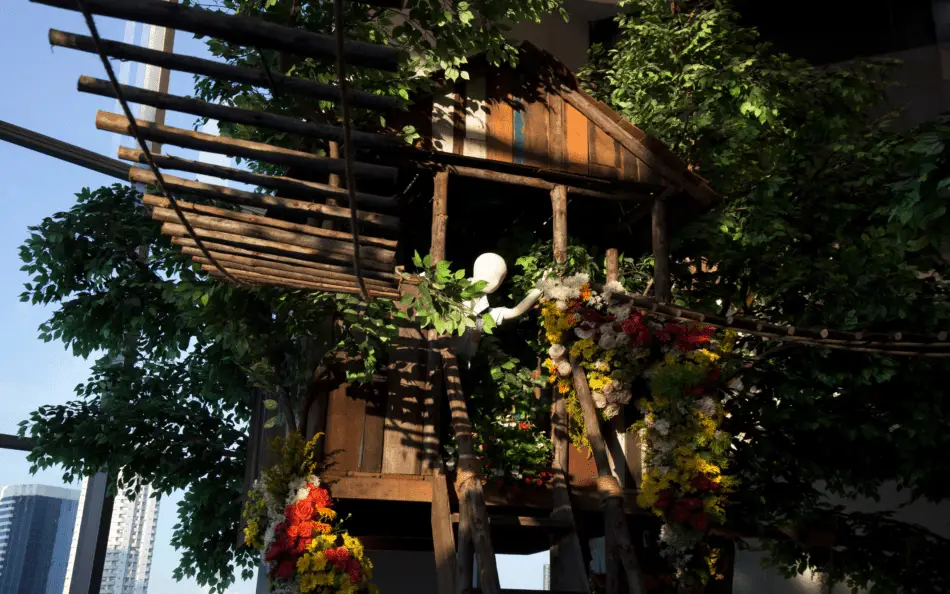
A treehouse instantly makes a backyard more exciting. But if you really want to elevate the design, adding a suspension bridge creates movement, adventure, and visual appeal.
To build a suspension bridge for a treehouse, you’ll need a solid support platform, structural cables, decking boards, safety netting, and secure anchor points. Proper measurements, load planning, and safety reinforcement are essential before construction begins.
This guide walks you through required materials, construction steps, structural considerations, and the pros and cons of installing a suspension bridge in your backyard.
Before You Build: Structural & Safety Considerations
1. Tree Strength & Load Capacity
Suspension bridges place significant lateral and downward stress on anchor points. If you attach directly to trees, make sure they are:
- Mature and structurally sound
- Free of disease or internal rot
- Large enough to handle dynamic movement loads
Improper anchoring can damage trees or lead to structural failure. For larger bridges, consulting an engineer is strongly recommended.
2. Consider Support Towers
If trees are not ideal anchor points, you can build dedicated support towers. While more complex, towers reduce stress on trees and increase long-term stability.
3. Budget & Measurements
Measure the distance between structures carefully. Bridge length, height, decking material, and cable grade will determine total cost.
DIY builds reduce labor costs, but professional installation may be safer for larger spans.
Materials Needed
- Pressure-treated or weather-resistant decking boards
- Structural steel cables (primary suspension)
- Eyebolts and heavy-duty nuts
- Lag bolts
- Galvanized screws
- Safety netting
- Guy wires (for reinforcement)
- Rope for handrails
Material quality is critical. Avoid lightweight hardware for load-bearing connections.
Step-by-Step: How to Build a Treehouse Suspension Bridge
Step 1: Build the Support Platform
Install a sturdy platform frame on the secondary tree or support post approximately 20–25 feet from the main treehouse.
- Drill pilot holes before installing lag bolts
- Use 2×10 boards for primary framing
- Add angled support braces underneath
- Ensure the platform is level before proceeding
Step 2: Install Deck Flooring
Attach hardwood or treated floorboards to complete the platform surface.
Leave space for:
- Bridge entry point
- Ladder or slide access
- Three-sided railing enclosure
Step 3: Reinforce with Guy Wires
Attach guy wires at the rear of the platform to reduce sway and stabilize the structure under load.
Step 4: Install Suspension Cables
Use structural steel cables as the primary support system.
- Secure cables with heavy-duty eyebolts
- Lock with nuts and washers
- Ensure cables are evenly tensioned
- Use fist grips to secure cable ends
Step 5: Attach Bridge Decking
Fasten wooden decking boards across the two main suspension cables.
- Space boards evenly
- Use corrosion-resistant screws
- Check alignment frequently
Step 6: Install Nets & Side Containment
Attach safety netting along both sides of the bridge. Nets prevent falls and add structural containment.
Step 7: Add Handrails
Install rope or cable handrails along both sides. Secure using strong knots such as bowline knots for reliable tension.
Pros of a Suspension Bridge for a Treehouse
- Creates dramatic visual appeal
- Encourages imaginative play for children
- Less material-intensive than solid-frame bridges
- Can span moderate distances
- Adaptable to uneven terrain
Cons & Limitations
Wind Vulnerability
Suspension bridges naturally move. High winds increase sway and stress on cables.
Weight Restrictions
All bridges have load limits. Overcrowding increases risk of cable or anchor failure.
Environmental Considerations
Areas prone to storms or extreme weather may not be ideal for suspension structures.
Is a Suspension Bridge Right for Your Backyard?
If your backyard has mature trees, moderate wind exposure, and enough spacing between structures, a suspension bridge can be a safe and exciting addition.
However, safety must always come first. Use quality materials, reinforce anchor points, and avoid exceeding weight capacity.
Conclusion
A treehouse alone is exciting — but adding a suspension bridge creates a unique backyard feature that enhances play, design, and experience.
With proper planning, quality materials, and structural awareness, you can build a secure and visually striking suspension bridge that brings adventure right to your backyard.
Always prioritize stability and safety over aesthetics to ensure long-term enjoyment.