
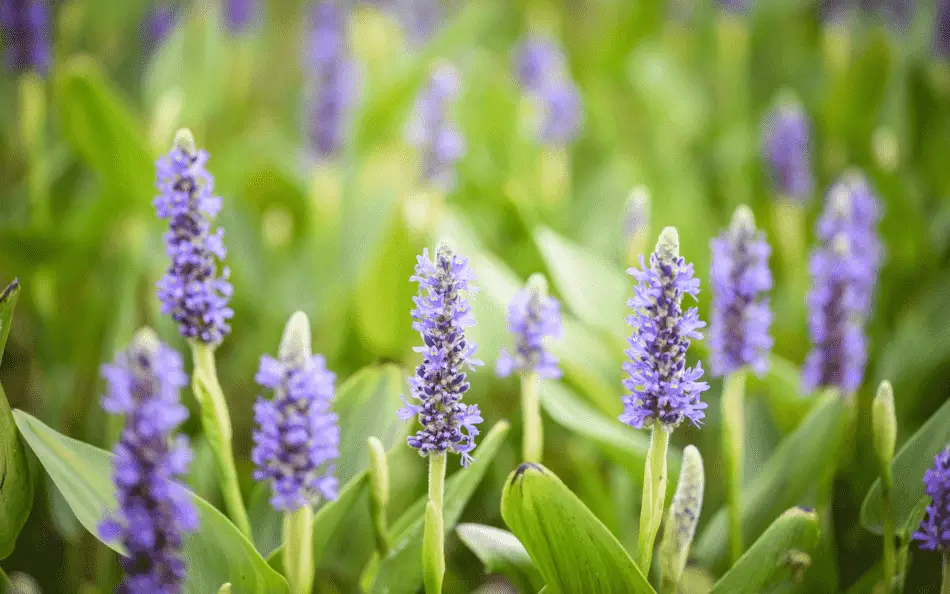
Adding aquatic plants to your backyard pond instantly improves its appearance, water quality, and wildlife value. One of the best native plants you can introduce is pickerelweed — a hardy, beautiful, and ecosystem-friendly aquatic perennial.
Pickerelweed (Pontederia cordata) thrives in shallow water with full sun, spreads through rhizomes, and requires minimal care once established. When planted correctly, it provides shade, erosion control, and habitat for fish, pollinators, and other wildlife.
This guide covers everything you need to know about growing pickerelweed — from plant profile and planting methods to maintenance and ecological benefits.
What Is Pickerelweed?
Pickerelweed (Pontederia cordata) is a native North American emergent aquatic plant commonly found in ponds, marshes, and slow-moving streams. It grows with its roots submerged while its leaves and flowers rise above the water surface.
Key characteristics:
- Height: 3–4 feet tall
- Leaves: Deep green, waxy, heart-shaped
- Flowers: Blue-violet spikes that bloom from early summer through fall
- Growth habit: Spreads via rhizomes (can form dense colonies)
The flower spikes can contain up to 100 small blossoms that bloom sequentially from bottom to top. The flowers attract bees, butterflies, and other pollinators.
Although the plant’s name references pickerel fish, it is not directly related — though fish frequently use it for shelter.
How to Plant Pickerelweed in Your Pond
1. Choose the Right Location
Pickerelweed performs best when:
- Water depth is 1–6 inches above the root crown
- The area receives at least 6 hours of sunlight daily
- The pond bottom is relatively flat
Plant along pond edges or shallow shelves for best visual impact and ecological value.
2. Planting in Pots (Recommended)
Because pickerelweed spreads aggressively through rhizomes, planting in aquatic containers helps control growth.
Steps:
- Use a fabric aquatic planting basket
- Fill with pond planting media or sandy clay loam
- Place 2–3 plant divisions per large pot
- Add a thin gravel layer on top to prevent soil from floating
- Submerge the container in 3–5 inches of water
3. Growing from Seed
You can also grow pickerelweed from seed by broadcasting 20–30 viable seeds per square foot in moist soil near pond edges. Seeds require cool, damp conditions to germinate and must not dry out.
Established plants typically bloom from June through October.
How to Care for Pickerelweed
Pickerelweed is low-maintenance but benefits from light management.
Sunlight & Water
- Full sun to partial shade
- Consistent shallow water levels
Maintenance
- Trim dead leaves and spent flower spikes
- Divide plants every 2–3 years to prevent overcrowding
- Monitor spread in small ponds
If left unmanaged, pickerelweed can form dense mats that trap organic debris and create excess muck as plant material decomposes.
To divide:
- Lift the plant from water
- Cut rhizomes into sections with roots and leaves attached
- Replant one division and remove or relocate the rest
Why Pickerelweed Benefits Your Pond Ecosystem
Pickerelweed is more than ornamental — it plays an important ecological role.
1. Algae Control
Floating leaves create shade, helping reduce excessive algae growth.
2. Erosion Protection
Its dense root system stabilizes shoreline sediment.
3. Wildlife Habitat
- Fish hide among stems
- Dragonflies lay eggs on stems
- Ducks eat the seeds
- Bees and butterflies feed on nectar
4. Natural Filtration
Like many aquatic plants, pickerelweed helps filter nutrients from the water, improving overall pond clarity.
Is Pickerelweed Invasive?
Pickerelweed is native to North America and is generally not considered invasive in its native range. However, it spreads aggressively in nutrient-rich ponds.
In small backyard ponds, container planting is strongly recommended to control expansion.
Best Companion Plants for Pickerelweed
Pickerelweed pairs well with other shallow-water plants such as:
- Cattails
- Arrowhead (Sagittaria)
- Cardinal flower
- Yellow flag iris
Together, they create a layered, natural pond edge.
Conclusion
Pickerelweed is one of the best aquatic plants you can add to a backyard pond. It’s attractive, hardy, beneficial to wildlife, and easy to grow in shallow water with full sun.
When properly managed, it enhances pond aesthetics, improves ecosystem balance, and creates a natural habitat for fish and pollinators.
If you want your pond to feel alive, dynamic, and ecologically balanced, pickerelweed is a strong addition.