
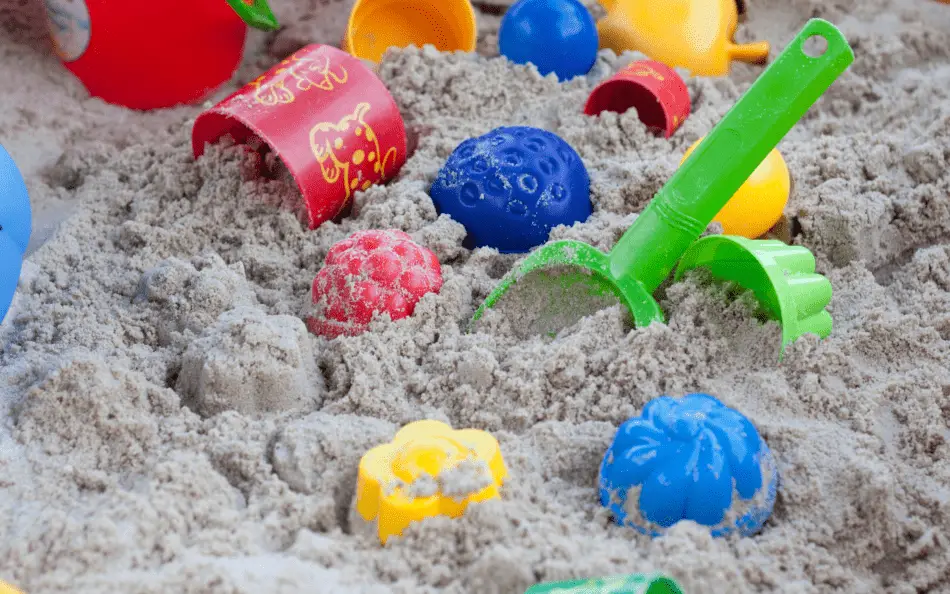
Sandboxes are a favorite backyard feature for kids, but wet sand can quickly turn into a soggy, unsafe mess. Excess moisture can lead to mold growth, bacteria buildup, unpleasant odors, and clumping that makes play difficult.
To dry sandbox sand quickly, you can (1) expose it to direct sunlight and turn it regularly, (2) spread it thinly on a tarp for faster evaporation, or (3) let it dry naturally with proper airflow. The oven method works for small batches but is impractical for full sandboxes.
Here’s how to safely and efficiently dry your sandbox sand.
Why Wet Sandbox Sand Is a Problem
- Encourages mold and mildew growth
- Attracts insects and pests
- Can develop unpleasant odors
- May harbor bacteria if contaminated
- Creates heavy clumps that are hard to play in
After heavy rain or a forgotten cover, quick action helps keep the sandbox safe.
3 Ways to Dry Sandbox Sand Quickly
1. Let the Sun Do the Work (Best for Light Moisture)
The safest and simplest method is natural drying.
- Remove the sandbox cover completely.
- Expose the sand to full sunlight.
- Rake and turn the sand every few hours.
- Break up clumps to improve airflow.
Lightly damp sand may dry within a day. Heavily saturated sand may take several days of sun exposure.
2. Spread the Sand on a Tarp (Fastest Outdoor Method)
If you need faster results, remove the sand and spread it thinly across a large tarp.
- Lay a tarp in direct sunlight.
- Spread sand in a thin, even layer (1–2 inches deep).
- Turn periodically to ensure even drying.
- Allow full drying before returning to sandbox.
This method significantly speeds up evaporation and prevents uneven drying.
3. Oven Drying (Small Amounts Only)
Oven drying is sometimes used for small quantities of sand, but it is not practical for an entire sandbox.
- Spread sand on a baking sheet.
- Bake at low temperature (200–250°F).
- Stir halfway through.
- Ensure sand is fully cooled before use.
Note: This method is time-consuming and should only be used for small batches of contaminated or heavily wet sand.
How to Prevent Sandbox Sand from Getting Wet
1. Always Use a Waterproof Cover
A fitted lid works best. If unavailable, use a tarp secured tightly with stakes or bungee cords.
2. Improve Drainage
Install a drainage layer (gravel or landscape fabric) beneath the sandbox to prevent water pooling.
3. Elevate Slightly
Place the sandbox on a slight slope or raised base to allow runoff.
4. Dry Immediately After Rain
Open the sandbox as soon as weather clears to prevent trapped moisture and mold.
Sandbox Safety & Cleaning Tips
Cover When Not in Use
Prevents animals from contaminating the sand and keeps debris out.
Rake Regularly
Removes foreign objects and discourages compaction.
No Food or Drinks
Prevents mold, insects, and bacterial growth.
Keep Pets Away
Sandboxes can attract animals if left uncovered.
Replace Sand Periodically
Even with good maintenance, replace sandbox sand at least once per year.
When to Replace Instead of Dry
If sand smells musty, shows visible mold, or has been contaminated by animals, replacement is safer than drying.
Conclusion
Wet sandbox sand doesn’t have to ruin playtime. Sun exposure and proper airflow are the safest and most effective ways to dry it. For faster results, spreading the sand on a tarp works best.
Preventative care — especially using a waterproof cover and maintaining proper drainage — will reduce the chances of dealing with soggy sand again.