
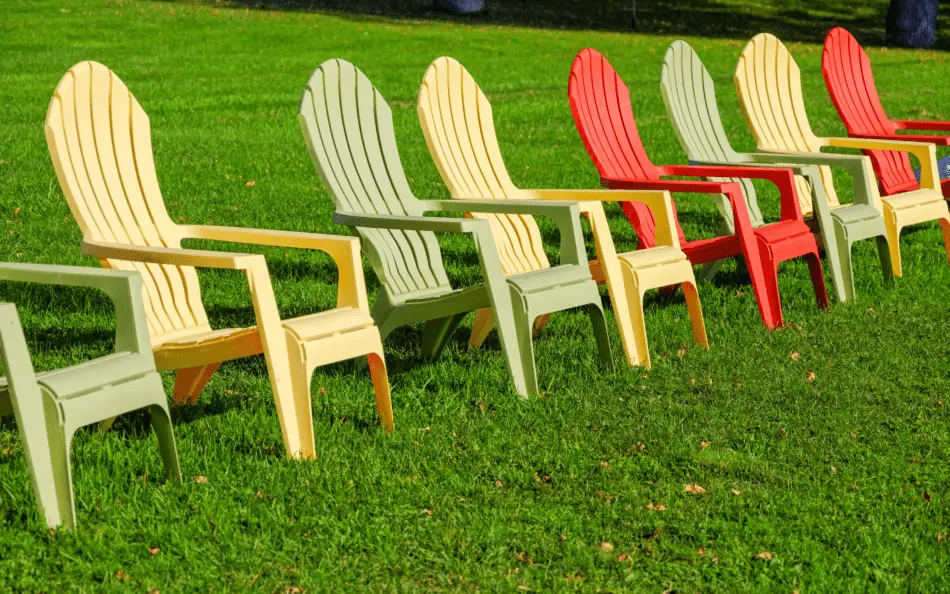
Lawn furniture can turn a yard into a real hangout space—until the legs start sinking into the grass. When that happens, you get wobbly chairs, divots, muddy spots, and eventually dead patches of lawn.
If you want to stop lawn furniture from sinking, you need one thing: more surface area under each leg. You can do that with quick DIY “feet” (cheap, removable) or with a long-term solution (a stable base like a patio, flooring, or designated sitting zone).
Below are the best DIY fixes, what to put under furniture on grass, and how to prevent the problem from coming back.
Why Lawn Furniture Sinks (and Why It Kills Grass)
Furniture sinks for two reasons:
- Soft or uneven soil: the legs press into the ground, especially after watering or rain.
- Small contact points: narrow legs concentrate weight into a tiny spot, so the grass gets crushed and the soil compacts.
Even if the furniture doesn’t fully “sink,” the grass under it can still die from:
- Compression: the blades get crushed and can’t recover.
- Blocked sunlight: grass under furniture (or under pads left too long) starts thinning.
- Moisture + heat: trapped humidity can speed up disease or rot.
Yes, you can place furniture on grass. But if you keep it in one spot for days or weeks, you should expect damage unless you spread the load and rotate the placement.
Fast DIY Fixes (Best When You Want Cheap + Removable)
These options work well if you move your setup often or you don’t want to build anything permanent.
1) Patio pavers under the legs
Place one paver under each leg to create a stable base. This is one of the most effective quick fixes.
- Tip: move the pavers every few days to avoid killing the grass underneath.
- Best for: chairs, small tables, and lightweight setups.
2) Interlocking floor tiles (a cleaner look)
Interlocking tiles can look nicer than pavers and create a wider stable surface. They’re usually more expensive but more “yard-friendly” visually.
- Best for: small seating zones where you want a tidy appearance.
3) Two long boards under chair legs (makes “skis”)
Attach or place two long pieces of wood under the legs (front and back) on each side. This spreads weight across a longer footprint and reduces sink.
- Best for: lawn chairs that sink deeply, soft soil, uneven yards.
- Bonus: wood usually blends well outdoors.
4) Tennis ball feet (cheap but visible)
Cut tennis balls and push them onto chair legs to increase contact area and soften the pressure.
- Tradeoff: it can look odd depending on your style.
- Still check the grass: wider feet help, but they can still compress grass if left too long.
5) Plastic bottle bottoms (budget + reuse)
Cut the bottoms off plastic bottles and use them like pads under each leg. It’s not pretty, but it works as a temporary solution.
- Best for: quick fixes, occasional gatherings.
6) Tarps or ground covers (only for short-term use)
A tarp can protect the grass from direct contact, but it can also trap heat and moisture and make the lawn look awkward.
- Rule: don’t leave it down for long—check weekly (or sooner in hot weather).
How to Stop the Sinking From Happening Again
If you keep putting furniture in the same spot, DIY pads become maintenance. The better move is to improve the area so the ground is stable.
1) Level the furniture area
Uneven ground makes sinking worse because weight isn’t distributed evenly. Pick a spot and level it so the legs share the load.
2) Fix shallow spots (top-dress and re-level)
If your yard has low areas, fill them gradually until the surface is even. This improves stability and reduces the chance of one leg digging in.
3) Choose furniture with wide legs (or add wide feet)
Wide legs naturally distribute weight better than narrow, pointy legs. If you already own narrow-leg furniture, add wide feet or pads.
Important: even wide legs can damage grass if you never move the furniture—rotation still matters.
What to Put Under Lawn Furniture on Grass (Best Choices)
If you want reliability, here are the most effective under-furniture bases—ranked from most permanent to most temporary.
1) A dedicated flooring zone (most “set and forget”)
If you use outdoor seating often, a designated flooring area is the cleanest long-term fix. It prevents sinking and saves your lawn from repeated damage.
- Design idea: create a small sitting “pad” area (even a simple layout) and keep the lawn around it healthy.
2) A patio (best long-term upgrade)
A patio gives you a stable base, looks intentional, and protects the grass because the seating is no longer on turf.
- Tradeoff: higher cost and more labor, but it’s the most durable solution.
3) Plywood (works, but looks temporary)
Plywood spreads weight well and doesn’t require perfect leveling. It’s great for fast stability—but it usually isn’t attractive.
- Best for: quick stable base for events, soft soil, time-limited setups.
Conclusion
Lawn furniture sinking into grass is mainly a pressure problem: narrow legs + soft soil = divots and dead patches.
For quick fixes: use pavers, tiles, wood “skis,” or simple pads under each leg and rotate placement.
For a real long-term solution: create a stable seating zone (flooring or patio) so you protect the lawn and stop fighting the same problem every season.