
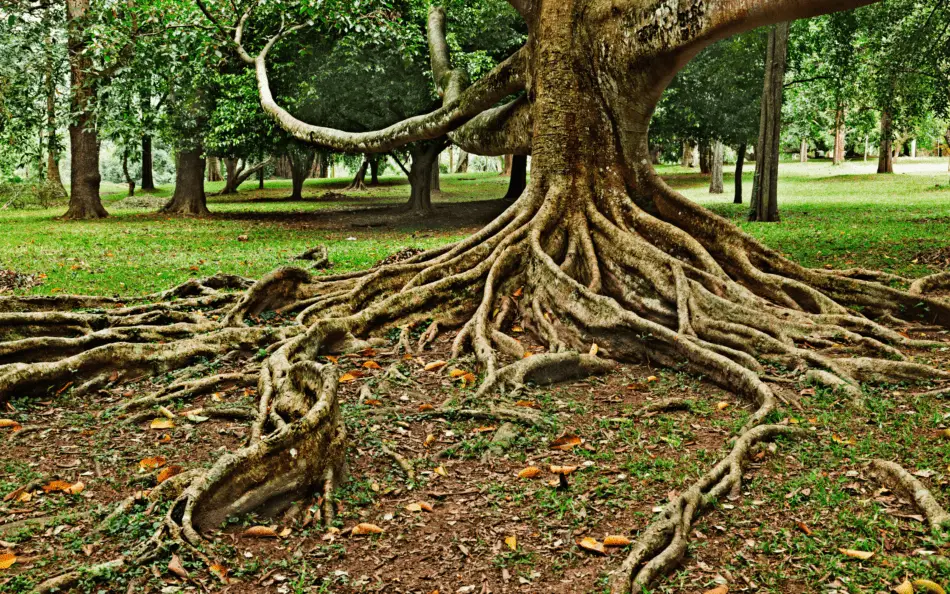
Exposed tree roots can create tripping hazards, interfere with mowing, and make your lawn look uneven. But covering them incorrectly can seriously damage—or even kill—the tree.
You should never bury exposed tree roots under heavy soil. Instead, level around them using mulch, shallow ground cover, or landscape redesign techniques that protect the root system.
Here’s how to manage exposed roots safely while improving your yard’s appearance.
Why Do Tree Roots Surface?
Tree roots often grow close to the surface because that’s where oxygen and moisture are most available.
Common causes of exposed roots include:
- Soil erosion from rain or runoff
- Compacted soil limiting downward growth
- Natural root expansion as the tree matures
- Species characteristics (some trees naturally grow shallow roots)
In many cases, surface roots are normal and not a sign of disease.
Can You Cover Exposed Roots With Soil?
No—adding thick layers of soil over exposed roots can suffocate them.
Tree roots require oxygen exchange. Burying them under compacted soil restricts airflow and increases the risk of rot and decline.
If soil must be added, it should not exceed 1–2 inches and should be done cautiously.
Safe Ways to Manage Exposed Roots
1. Apply Mulch (Best Option)
Mulch protects exposed roots without suffocating them.
- Use organic mulch (wood chips, shredded bark, pine straw).
- Apply 2–4 inches thick.
- Keep mulch several inches away from the tree trunk.
Mulch helps retain moisture, reduce erosion, and cushion foot traffic.
2. Install Ground Cover Plants
Low-growing plants can reduce erosion and improve appearance.
When installing:
- Do not dig deeply around roots.
- Add no more than 1–2 inches of soil.
- Choose shade-tolerant, low-water plants.
Avoid aggressive plants that compete heavily for nutrients.
3. Redesign the Area
If roots significantly disrupt walking paths or lawn use, consider:
- Creating a mulch bed around the tree
- Installing stepping stones over root zones
- Redirecting walkways
This protects the tree while eliminating tripping hazards.
4. Prevent Further Soil Erosion
If erosion caused the exposure, stabilize the area:
- Improve drainage
- Install edging barriers
- Use jute netting on slopes
Stopping erosion prevents additional roots from surfacing.
Problems Caused by Exposed Roots
- Tripping hazards
- Lawn mower damage
- Soil drying around roots
- Root injury from foot traffic
Roots themselves are rarely the problem—human traffic and soil disturbance usually cause the damage.
What NOT to Do
- Do not bury roots under thick soil layers.
- Do not cut large surface roots without consulting an arborist.
- Do not pile mulch against the trunk (avoid “mulch volcanoes”).
- Do not use heavy equipment over root zones.
When to Consult a Professional
Call a certified arborist if:
- Large structural roots are interfering with foundations.
- The tree shows signs of decline.
- You’re considering root removal.
Cutting major roots can destabilize or weaken the tree.
Final Thoughts
Exposed tree roots are often a natural part of a mature tree’s growth. Instead of trying to completely level over them, focus on protecting and integrating them into your landscape.
Mulch, shallow ground cover, and thoughtful redesign are safer solutions than burying or cutting roots.