
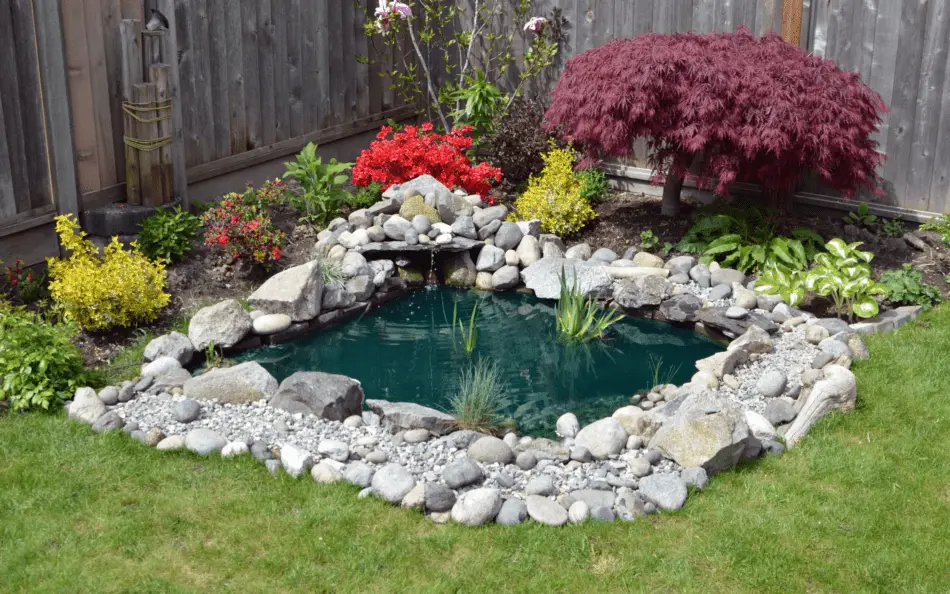
Having a pond in your yard, whether man-made or all-natural, is the dream of many. The main reason why many people want a pond in their yards is the sense of beauty and calmness that it provides. It feels like you are in the middle of the forest, wandering and relaxing after a stressful day. Maintaining a pond may be easy for experts but it’s an intricate task for a beginner, especially if you want to oxygenate your pond without a pump.
Oxygenating a pond without a pump is possible as a wildlife pond naturally runs on its own. Adding life into your ponds, like fish and plants, helps maintain your pond. Keeping your pond water clean and removing algae will result in a sustainable life cycle. These simple and ordinary facts will lead to innately nurturing your pond.
In this article, we will tackle how to oxygenate your pond without a pump. Competently, there are various means to keep your pond water clear and clean naturally. These recommendations will make your pond aesthetically unique and keep things all-natural.
Do Natural Ponds Have Pumps and Filters?
A natural pond on a basic level exists in nature. You might find such a pond in parks or in the woods. In a natural pond, nature is overall in charge. It is rich in plants, and the water charms numerous animals like salamanders, frogs, and insects. In a natural pond, there are no filters, pump, and chemical means needed, and ideally, no liner.
A natural pond is an attractive element in many places and has been instrumental to wildlife. Everything lives together in a natural pond in harmonious balance. No one needs to clean or oxygenate it. Additionally, the water doesn’t need filters and pumps to keep it clean and aerated.
Nature is brilliant in maintaining the balance of the ecosystem. Every part of the pond plays an important role in retaining balance, and if any of these elements is lost out of balance, nature has its way of restoring things.
Other than that, a natural pond can also be man-made, in which case it can survive without using filters, pumps, or even chemicals. It may or may not have a pond liner to hold up the water, and everything else is managed by nature with minimal maintenance required.
However, having a pond with a pond liner is artificial. A pond built with it will never be in the same state as a natural pond where everything lives in harmony, the same way it does in a natural pond. If you don’t have any filtration system, the pond will be full of algae and the water will become smelly and dirty.
A pond is a great water feature to add to your backyard. It can provide fresh air, beautiful scenery, and a calming natural sound. But the thing is, ponds are expensive to build and difficult to maintain. If you are still not sure whether you want a pond in your backyard or not, here are 5 benefits of having a backyard pond that may help you make a decision.
Tips to Clear Pond Water Naturally
Applying natural methods for any work is great at all times. The same goes for keeping pond water clear. Natural methods are safe in any event, producing good results without costing a lot of money. As many pond owners are aware of the importance good quality water plays in a pond habitat, they would like to know the secret of how to keep their pond clean and clear naturally. Here are some helpful tips to make your pond water crystal clear
Maintain enough fish in your pond
Fish are an essential part of a pond’s ecosystem. The right proportion of fish is necessary for the pond water. In many ways, too many of them is not always a good thing. The number of fish you can keep is determined by the size and capability of your filtration system. If you have 10’’ of fish for every 100 gallons of water, your pond is likely overpopulated. Excessive fish waste may cause an imbalance in your pond water.
You need to observe your fish during summertime, when the warm water struggles to hold on to oxygen. Adding an aerator may be necessary at any period when your fish appear to be grasping at the water surface. Fish, like humans, need to breathe. Thus, keeping their water oxygenated properly will keep them alive and make your water clear.
If you are struggling to keep your pond water clear or have enormous algae inside of it, this may indicate your filtration system is insufficient, can’t handle the fish waste, and can’t provide enough oxygen. Make sure to clear any leaves and other debris from your pond frequently to refrain them from decaying and filling your pond with ammonia. It is important to do this regularly, especially if you don’t have a mechanical skimmer (a device used for the mechanical recovery of oil in water).
End over-feeding your fish
Stop overfeeding your fish; you won’t get them fat if you give them extra food. They will not eat the food if they are already full, and the uneaten food left to decay will harm your pond. It will create a bad environment for the fish, especially if you’re feeding them food with additives that may mess up your water and possibly break up the ecological cycle of the pond.
See to it that you feed your fish no more than once a day as they can only eat for 2-3 minutes. Many fish enthusiasts don’t know this and get the wrong ideas. And because of this, you may tend to overfeed your fish, resulting in downgrading the quality of your pond water.
Remove debris from the pond before it decays
Mechanically, a pond skimmer will remove nearly all the debris from the water surface. However, you can also do it manually using a pond net to skim the small sticks and leaves before they sink to the bottom of the pond and decay. Decayed leaves, along with leftover food and fish waste, can cause ammonia levels to strike in your pond. Ammonia harms fish and should be addressed immediately.
Use pond plants
Plants are great natural filters. They control the growth of algae, help remove excess nutrients from the water, and add more oxygen content. Adding more pond plants is one of the great continuing ways to keep pond water clear and healthy. If you don’t have any plants in your pond, high maintenance is required to maintain good quality and clear water without a filter. In addition, plants encourage wildlife, like insects, frogs, and newts, which can help bring a natural pond to life.
For a wildlife pond without a filter, no more than 60% of your pond must actually be full of pond plants for the greatest benefits. For plant selections, we suggest you choose a mix of marginal varieties, floating, and submerged species. Submerged plants will provide oxygenation in the water while the rest will aid in removing harmful substances and reducing excess nutrients.
Observe water changing if you have fish
Regular water change is needed if you have fish in your pond and don’t have a filter. It is the easiest way to maintain clarity and improve the water’s quality. Water changes will facilitate the reduction of nitrates, ammonia, excess nutrients and help remove tannin color from the water. You should normally change around 10 to 30 % of the water volume by draining the top level of the water using a water pump or vacuum.
Water changing cannot solve the main reason behind the pond water’s quality problem, but it can be of little help to work out the issues. Furthermore, activated carbon hose attachment is beneficial to remove chlorine from the water throughout the water changes. It is particularly important as it represents a threat and is highly toxic to aquatic life.
Add beneficial bacteria
Beneficial bacteria is a product used for pond maintenance, is one of the natural helpers and is amongst the safest supplementation to your pond. There is no need to worry about putting too much as it will not overdose nor kill your fish or plants. Unlike other algaecides, it is safe for both fish and humans.
Beneficial bacteria treatments reduce waste and help boost natural populations. It’s in control of the breaking down of harmful substances, such as nitrates and ammonia, into less damaging nitrates that are used by pond plants as a fertilizer.
However, beneficial bacteria need a little bit of waste to live. So, making your pond purely clean is not good for biological filtration. The best thing to do is add a form of aeration, like an air pump or fountain. Then, you must clean the top layers of sludge every few months, leaving behind a small amount.
Take away excess bottom sludge
A little sludge is beneficial for a natural pond. It supplies nutrients for plants and bacteria and provides a place for frogs and salamanders to hide. But, if the waste levels of the pond exceed the limit, the pond’s ecosystem will start to suffer as the water quality will downgrade and the oxygen content will decrease. Plus, if you have a few fish in a filter-less pond, regular cleaning is necessary to get more sludge out if you want to maintain good water quality.
Sludge alone will not get your pond water dirty. A small amount of sludge can in fact promote cleaner water. You only have to keep it on top of it every few months to make sure that your pond has the right level of oxygen and is free of algae.
Seeing that the majority of sludge is at the bottom of the pond or on the pond liner, a simple way to clean it out is to use a basic pond net or water vacuum. We suggest installing a quality pond net to trap fallen debris before they fall into the pond and add to the sludge.
Tips for Natural Pond Algae Treatment
There are two main types of algae developed in ponds and other water features. The first one is suspended, single-celled algae, and the second one, string or filamentous algae. Suspended algae, so-called floating algae, are usually described as ‘green water’ and cause water characteristics to look green and cloudy.
Having a pond with murky algae may cause your pond to lose its charm. Algae is the main reason why the pond water turns green. Luckily, there are several easy options to get rid of it. Here are some of them.
Put barley straw
Barley straw is an effective, natural algae killer. Barley straw not only controls pond algae but also won’t harm your fish and plants. Plus, it is cheap. It is easy to use and will solve the algae problem in your pond. You can choose to use barley straw in liquid form or as pellets. It is available locally in garden centers or online.
Each barley straw can treat 1,000 gallons of water. Depending on the size of your pond, you may need to use multiple barley straws to control the algae’s growth. You can hang the bundles of barley straw in the waterfall if you have one in your pond.
Introduce algae-eating species to your pond
There are many water creatures you can add to your pond that love to munch algae. Adding a few aquatic pond snails, as well as some tadpoles, is a big help to reduce algae in your pond. Tadpoles will also be delighted to eat mosquitoes and insects that may settle on the surface of your pond. They will enjoy eating the algae in your pond and bring more life to it.
Keep fish that eat algae
Certain fish species like to eat pond algae and could be of great help in cleaning up the pond. Of course, it is safe for fish to eat algae. Algae can grow and survive in stagnant water and quickly take control of the entire pond if left to its own device. Having an appropriate amount of cleaning fish in the pond is necessary to control algae.
Keeping fish like the Siamese Algae Eater is a great choice as it is one of the most effective algae-eating fish since it eats different types of algae. You may also consider choosing other top algae-eater fish, such as the Chinese Algae Eater, Twig Catfish, Otocinclus Catfish, Whiptail Catfish, Bristlenose Pleco, and Mollies.
Aside from being something nice to look at and listen to, your backyard pond can also be home to numerous living creatures. If you have enough space, you can definitely get a few fishes to live in your pond. Among the numerous fishes that you can keep, which species should you choose? Here are 12 amazing fish you can keep in your backyard pond.
Tips to Clear Pond Water Faster
As we already discussed the steps to clear pond water naturally, here are some tips to quickly make pond water clean and clear.
Manually remove the algae
Get rid of algae from the surface of your pond by using a skimmer or algae net. It is the easiest way to clean the surface of the pond. It may take you some time but it will give fast results. Although this may be a quick solution, it is not a long-term measure to solve the problem.
Rinse your pond filter every day
If you installed any type of water filter system in your pond, cleaning and rinsing the water filter every day will help eliminate pond algae faster. If your water pump has no filter, we suggest acquiring a water pump with a filter box. It will keep your pond water clear much faster and more easily.
Use hydrogen peroxide
One more thing that considerably works to control algae in ponds is putting hydrogen peroxide. But no worries, it won’t kill your fish. It is ideal for sterilizing fish ponds and will turn into harmless water and oxygen after 24 hours in contact with water. Therefore, it is the perfect solution for a pond. We suggest doing some research on how to use hydrogen peroxide to treat your pond.
Conclusion
A pond is a fascinating and enormous addition to your property. Having a natural pond gives satisfaction, knowing that anything can work naturally with the ingenious ideas we could create. Ideally, your pond should maintain itself with very little intervention, but it is best to check it every once in a while to make sure that everything is balanced and working the way they should.
As we have previously mentioned, there are a lot of things that you can do to keep your pond alive and thriving. With all these tips and ideas, you are now capable of running your pond the all-natural way. Always remember to maintain the natural pond’s ecosystem and the sustainable environment for your fish and the other living creatures that call your pond their home.