
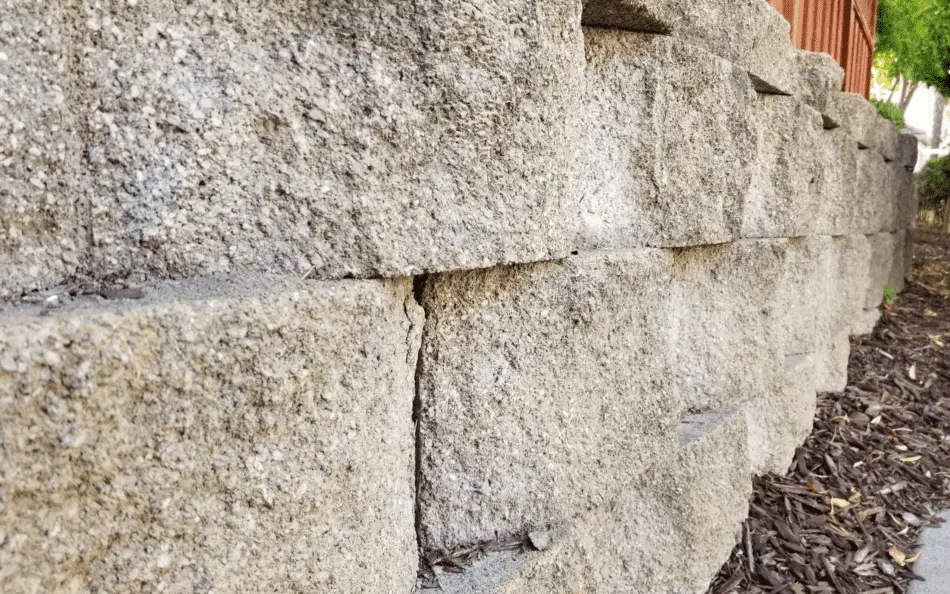
Retaining walls are an efficient solution to keep soil in place. The idea allows people to make use of the space beside the wall, and plant plants on top of the soil behind the wall. This also requires the proper construction and solid foundations for durability and longevity.
Landscape fabric is recommended to reinforce a retaining wall. It serves as a barricade against the entering of soil into the walls’ small holes and prevents weeds from growing on its outside surface. The fabric contributes to the long-term robustness of the wall.
In this article, we will discuss the importance of landscape fabric behind a retaining wall and how to lay it. We will also tackle the types of retaining walls available on the market and how to prevent three common failures from happening.
Do You Need Landscape Fabric Behind a Retaining Wall?
Landscape fabric is recommended to be used behind a retaining wall to maintain its shape and durability. The fabric serves as a barricade to separate the soil from the walls. This helps prevent weeds and soil from accessing the holes in the future.
Landscape fabric plays a huge role in the control of weeds. This material is made of woven fabric, and some types possess ultraviolet protection to ensure the longevity of the fabric. Whether you are going to use bricks and wood for the wall, it is essential to put landscape fabric behind your retaining wall.
The purpose of putting landscape fabric behind a retaining wall is to separate the soil from the wall since retaining walls are specifically constructed to maintain the shape of structures and garden landscapes. Landscape fabric helps the retaining wall sustain its shape and build over time.
Landscape fabric prevents the soil from entering through openings in the walls because if the soil happens to access these openings, it will give way to the growth of unwanted weeds. Apart from weeds, the soil may also cause the construction of the wall to separate if ignored for a long time.
How to Lay Landscaping Fabric Behind a Retaining Wall
The first step in laying landscaping fabric behind a retaining wall is to dig a trench. Put the fabric in the trench, then refill it with gravel and soil. Lastly, clear the area by removing the excess soil, objects, and materials you used while working.
Before you start the whole process, prepare a shovel, gravel, rake, and scissors. Avoid putting too much force in digging and backfilling to prevent the walls from collapsing.
1. Dig behind the wall
First, you should dig to lay the landscaping fabric behind the retaining wall. Only dig a 6-8 inches trench, until you reach the bottom part parallel to the ground level of the wall. Be careful while digging to prevent the wall from collapsing.
2. Put the landscaping fabric
Push the landscaping fabric down to the bottom part of the trench you just dug. Once you’ve placed the fabric, put the top portion of it on top of the wall. Put a heavy object over the wall to hold the fabric in place.
Make sure that all the parts behind the wall are covered with landscaping fabric by repeating the process. Landscaping fabric has a specific width that may not cover the whole width, so you need to repeat the process. You can also attach the fabric to the wall using construction adhesive.
3. Refill the trench
Once you’ve covered the entire retaining walls’ back, refill the trench you dug with gravel. Backfill the hole gradually to avoid putting too much pressure on the walls, otherwise, it could collapse. Since the wall is already constructed with the soil supporting its back, having dug a space behind it can cause movements to the bricks if you force it to backfill it.
Leave at least 2 inches while filling the trench. The space you provided is going to be filled with the soil you dug. Don’t forget to level the top area of the gravel to flatten and smoothen it.
4. Fill the remaining space
Next, you should fill the space you left with soil. This refers to the area where you left 2 inches of space in the trench you filled with gravel. You can add another inch to fully cover the gravel and the trench.
Smoothen the soil and push a bit to compress it. Gradually press it to avoid too much pressure, which could damage the walls. Repeat this process until the soil is at the same level as the ground at the back of the retaining wall.
5. Clear the area
Finally, clear the area by removing the objects you put to hold the landscaping fabric. Since you’ve already buried the fabric with gravel and soil, you can now cut the excess parts of fabric leveled to the retaining wall. Also, remove the remaining soil you haven’t used while filling the trench.
Types of Retaining Walls
Retaining walls are commonly made of concrete, interlocking concrete blocks, timber, stones, and cinder blocks. Timber and stones are the cheapest options among those enumerated above. For durability, concrete, cinder blocks, and stones are recommended.
1. Concrete (15$ – 20$ per square foot)
Concrete is one of the most durable materials when building a retaining wall. Aside from being the most prominent in the world of construction, it is also flexible, whether you use it for houses, roads, or buildings. Thus, you can utilize this material to ensure the longevity of your retaining wall.
Although other materials in constructing retaining walls are battered, you can form a shape if you use concrete. Below are the pros and cons of retaining walls made of concrete.
-
Pros
The main advantage of concrete retaining walls are their durability and your freedom in terms of shapes. Guarantee the material is reasonable and easy to use in making retaining walls. This material is also available in different colors, which can add up to the beauty of your walls.
Concrete retaining walls show a great resistance against fire, rust, and deterioration caused by termites. With such, you can save money on maintenance.
-
Cons
Although this type of retaining wall is available in different colors, it still requires a design once the construction is complete. In case of a mistake, you can’t just easily patch it, which may cost you a lot. The whole process requires the supervision of a professional to pour the concrete.
Concrete retaining walls have no footing, which contributes to the foundation of the structure. That means they are only installed at a limited height. They are also undeniably difficult to remove, which requires huge equipment to pull the materials.
2. Interlocking Concrete Blocks (10$ – 20$ per square foot)
Interlocking concrete blocks can also be used to build retaining walls. This material doesn’t need mortar to make a bond between bricks. The structure of the brick is shaped to lock in the bricks on top of each other. The best example to describe its features is Lego blocks.
The installation of interlocking concrete blocks differs from that of other types of blocks. All you need to do is key in the blocks on top of the designated design to fit in. Since mortar is not necessary to bond this kind of block, you can save money on it.
-
Pros
This material is available in various shapes, colors, and textures. The main advantage of this type of wall is that you can extend it up to 20 feet by following techniques like keyed, battered design, and many others.
-
Cons
Interlocking concrete blocks are created to specifically fit their pairs. That means you can’t mix the blocks when you install them. Instead, you need to make sure that each block is placed on the right pair so that you can avoid mistakes because you can’t easily change them immediately.
Since interlocking concrete blocks don’t require a mortar, the gap left between the bricks may provide access to rainwater. Insects and other unexpected objects may also seep in the gaps.
3. Timber (10$ – 15$ per square foot)
Just like there is a concrete type of retaining wall, you may also build such a wall using timber or wood. Although the purpose of this kind of material does not differ, it provides enough drainage for the subsoil. Timber’s features are more appealing than those of concrete.
-
Pros
You can install timber walls on your own, unlike concrete walls, which require the help of an expert. This type of wall can reach up to 4 feet if it is designed by an engineer. The design of this material is also innately attractive. Installing timber retaining walls is cheaper than constructing one with other materials.
-
Cons
Timber retaining walls are durable, but not as much as concrete ones. Installing one on your own is possible but requires you to cut timber in specific shapes to fit your ideal retaining wall. The whole process requires more than one person.
Besides, most timbers are vulnerable to insects and pests, and prone to rot and fungi attacks. They also require expensive maintenance.
4. Stone and cinder blocks (10$ – 25$ depending on whether you are using stone or cinder blocks)
Another way to build a retaining wall is by using stones and cinder blocks. These can save you money since you don’t need to buy the major materials to build your wall. Although, this only applies to stone. For a cinder block, you need to buy it, which luckily is cheap.
-
Pros
The main advantage of stones on retaining walls is their attractive appearance. You can easily save money by just picking stones on construction sites. Cinder blocks are also cheap materials that you can brace with concrete or steel.
-
Cons
Stones have indefinite shapes, which are hard to stack with mortar. They need a knowledgeable and experienced person to do so. The same thing applies to cinder blocks, which also require a neat finish to achieve a nice appearance.
Although stones are free to collect, it is a hassle to collect a bunch of them. It is recommended you have a vehicle to transport them since this material is heavy.
Safeguarding Against Three Common Failures
Over time, retaining walls are prone to damages and cracks, also called failures. Three of the most common failures are blowout, frost-heave, and wet soil. These failures occur due to water-saturated soil, a lack of drainage, pressure, and weight.
1. Blowout
One of the most common construction failures is a blowout failure. With such, the wall’s position seems to be about to topple down. As a preventative measure, you can look for an architect if structures or vehicles are situated close to the wall. Adding more tiebacks can help reinforce the structure of the wall.
2. Frost-Heave
In this type of failure, there is an insufficient footing or drainage. This results in the heaving effect upwards, which damages the wall. To prevent the damages from escalating, let the walls rest on a bank run gravel by burying the footing below the frost depth. As for deep frost, you should use concrete blocks to build the retaining wall.
3. Wet soil
Since the retaining wall aims to barricade the soil, wet soil on its back can result in pressure due to its heavyweight. These instances can lead the wall to topple down if ignored for too long. You can prevent this from happening by changing the soil at the back with about 2 feet of bank run gravel. Put a perforated tile under the base of the bank-run gravel to allow the sun to dry out the wet soil. Remember that you only need to put about 6 inches of topsoil.
Wet soil failure happens due to poor drainage. That means the water doesn’t have a way to go out, making the soil saturated. Thus, before constructing your retaining walls, you should plan adequate drainage to prevent wet soil failure from happening.
Conclusion
Retaining walls have been a great structure to restrain the soil from uneven areas. This requires proper construction to maintain its durability and shape over a long period of time. One practice that will improve the structure of your wall is adding landscape fabric behind it. Although some materials guarantee your wall’s longevity, the local climate can cause it to topple down. It’s best to take factors like this into consideration when you are planning to build a retaining wall.
It is essential to keep the retaining walls strong, even if it shows damages. This doesn’t only mean keeping the structure in place but also avoiding accidents caused by the possible collapse of the wall. To prevent further damages and accidents, it is best to repair your retaining walls immediately after they show signs of damage. If you do not want to be in these situation, then you need to ensure that your retaining wall is built with good materials that are compatible with your surroundings.