
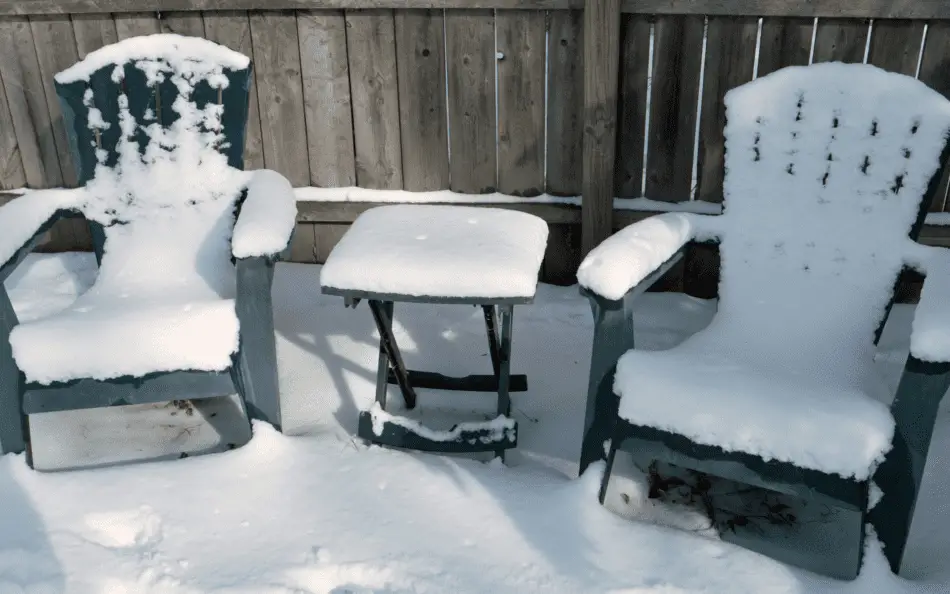
Winter weather can be brutal on outdoor furniture. Snow, ice, freezing temperatures, and moisture can crack, rust, warp, or weaken materials over time.
In most cases, you should not leave patio furniture outside during winter—especially wood, wicker, cushions, and untreated metal. Even weather-resistant materials can deteriorate faster if left exposed.
Below is how to prepare different materials for winter and the safest storage options.
Should You Leave Patio Furniture Outside in Winter?
Some materials tolerate cold better than others. But freezing moisture is the real enemy. When water enters small cracks and freezes, it expands—causing splits, rust, and structural damage.
Here’s a quick material breakdown:
- Wood: High risk of cracking and moisture damage.
- Wicker (natural): High risk of splitting and mold.
- Wrought iron: Prone to rust.
- Aluminum: Weather-resistant but can weaken over time.
- Plastic: May become brittle in extreme cold.
- Treated teak or resin wicker: More winter-resistant but still benefit from storage.
If possible, storing furniture indoors is always the safest option.
How to Prepare Patio Furniture for Winter
Before storing anything, always clean and dry it thoroughly. Dirt and moisture left behind during storage can cause mold and long-term damage.
Wood Furniture
- Clean gently with mild soap and water.
- Let it dry completely.
- Apply a protective oil or sealant.
Wood is especially vulnerable to freeze-thaw cycles. Even sealed wood performs better when stored indoors.
Teak Furniture
Teak is naturally durable but still benefits from cleaning and oiling before winter. Avoid harsh pressure washing. Use a mild vinegar or teak-specific cleaner if needed.
Aluminum Furniture
- Wash with detergent and warm water.
- Dry completely to prevent trapped moisture.
- Touch up paint if scratches expose metal.
Although aluminum resists rust, repeated freeze-thaw exposure can weaken joints over time.
Wrought Iron Furniture
- Remove rust with sandpaper.
- Wash and dry thoroughly.
- Apply rust-resistant paint or coating.
Iron should never sit exposed to snow and moisture all winter.
Wicker Furniture
Natural wicker (rattan, bamboo) should always be stored indoors. Moisture causes splitting and mold.
Synthetic resin wicker performs better but still benefits from covering or indoor storage.
Cushions and Fabrics
- Machine wash removable covers.
- Air dry completely.
- Store in a dry indoor space.
Never leave cushions outside during winter—even under covers.
Best Ways to Store Patio Furniture for Winter
1. Indoor Storage (Best Option)
A garage, shed, or basement provides the most protection. Cover furniture lightly to keep dust away but allow airflow.
2. Breathable Patio Covers
If indoor storage isn’t possible, use high-quality, breathable covers. Avoid fully sealing furniture in non-breathable plastic.
Important: Remove snow buildup from covers to prevent water pooling and seepage.
3. Tarps or Plastic Wrap (Temporary Use)
These can protect against snow but trap moisture. Only use if furniture is completely dry, and allow some airflow if possible.
What Furniture Can Stay Outside in Winter?
Some materials handle winter better:
- Treated teak
- Synthetic resin wicker
- High-quality cedar
- Recycled plastic furniture
Even with these materials, covering or partial protection extends lifespan significantly.
Final Recommendation
While some patio furniture can survive winter outdoors, storing it indoors is always the safest and most cost-effective option long term.
Freezing moisture causes most winter damage—not just cold air. Clean, dry, seal, and store your furniture properly, and it will last for many seasons.