
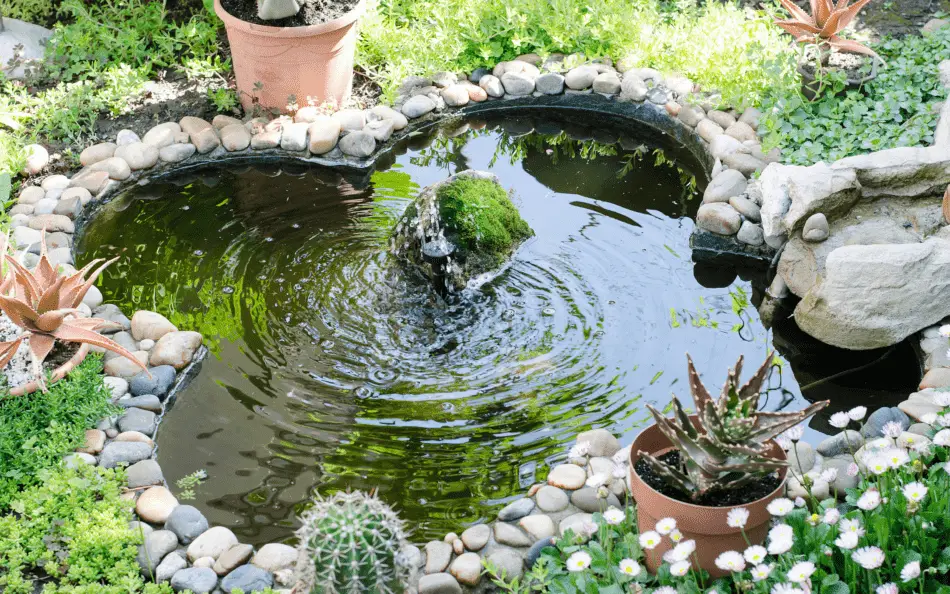
If your pond suddenly looks like green soup, you’re dealing with an algae bloom. Green pond water is one of the most common pond problems—and it almost always comes down to one issue: excess nutrients.
Green pond water happens when nitrate and phosphate levels become too high. These nutrients feed microscopic algae, which multiply rapidly in sunlight and turn the water green.
The good news? You can clear green water naturally by restoring balance to your pond’s ecosystem.
What Causes Green Pond Water?
Green water is caused by free-floating, single-celled algae. When sunlight and nutrients are abundant, algae reproduce quickly and cloud the water.
The most common causes include:
- Excess fish waste
- Overfeeding fish
- Decomposing leaves and debris
- Too few aquatic plants
- Strong direct sunlight
In simple terms: when nutrients build up faster than they’re removed, algae take over.
1. Sludge and Organic Debris
Leaves, fish waste, dead algae, and grass clippings sink to the bottom and decompose. As they break down, they release nitrates and phosphates—exactly what algae need to thrive.
2. Too Many Fish
Koi and goldfish produce significant waste. In small ponds, even a few large fish can overload the system.
More fish = more waste = more nutrients = more algae.
3. Not Enough Plants
Aquatic plants compete with algae for nutrients. Without enough plants to absorb nitrates, algae dominate the ecosystem.
How to Clear Green Pond Water Naturally
The goal is not to kill algae instantly—it’s to restore balance so algae can’t overgrow again.
Step 1: Remove Sludge and Debris
Physically remove organic buildup from the pond bottom.
- Use a pond net for small ponds.
- Use a pond vacuum for larger ponds.
- Skim leaves before they sink.
Reducing sludge immediately lowers nutrient levels.
Step 2: Reduce Fish Load
If algae problems are constant, your pond may be overstocked.
- Rehome excess fish if necessary.
- Feed only what fish consume within a few minutes.
- Reduce feeding during cooler months.
Lower waste production = lower nutrient levels.
Step 3: Add More Plants
Aquatic plants absorb nitrates and provide shade.
Best options include:
- Floating plants: water lilies, lotus
- Submerged plants: hornwort, anacharis
Shade reduces sunlight exposure, slowing algae growth.
Step 4: Improve Aeration
Beneficial bacteria break down waste more efficiently in oxygen-rich water.
Good aeration options:
- Air pumps
- Waterfalls
- Fountains
Better oxygen levels help beneficial bacteria outcompete algae.
Step 5: Add Beneficial Bacteria
Natural bacteria treatments help break down organic waste and reduce nutrient buildup.
They don’t eliminate algae instantly, but they help stabilize the pond long term.
How to Prevent Green Water From Returning
- Maintain appropriate fish density for pond size.
- Avoid overfeeding.
- Skim leaves regularly.
- Keep 40–60% of the surface shaded with plants.
- Ensure proper filtration and circulation.
Prevention is easier than repeated algae treatments.
When Should You Use Chemicals?
Chemical algaecides work quickly, but they don’t solve the root cause. If nutrient levels remain high, algae will return.
Use chemicals cautiously and only as a temporary fix while improving long-term balance.
Final Thoughts
Green pond water is usually a sign of nutrient imbalance—not a permanent disaster.
By reducing waste, managing fish populations, increasing plant coverage, and improving aeration, you can naturally restore clear, healthy pond water.
Focus on balance instead of quick fixes, and your pond will stay clear much longer.