
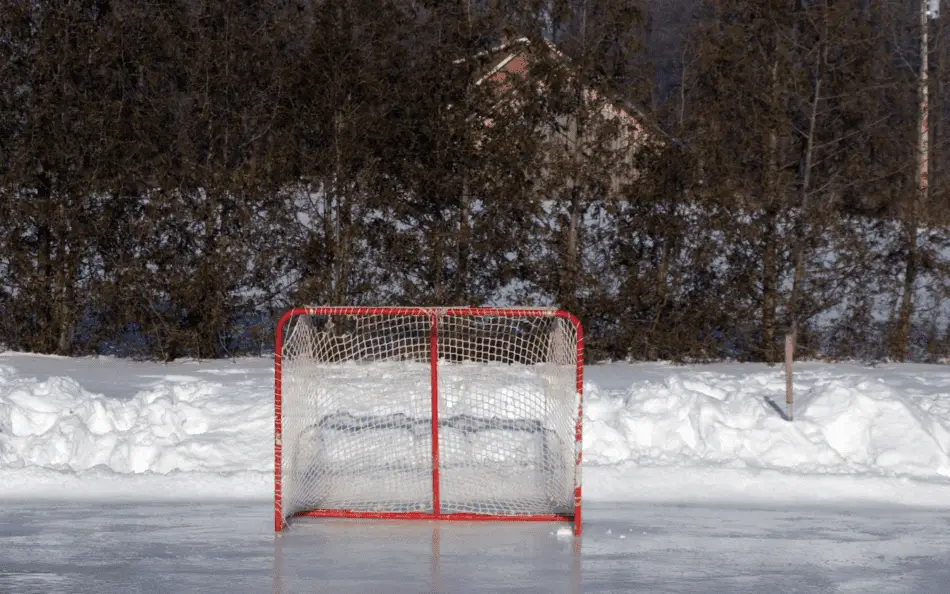
Many families are already planning their winter sports activities. If you’re planning on buying new backyard ice rink liners and building up your homemade ice rink this year, you’ll want to avoid some of the most typical problems. One of them is having an uneven backyard ice rink.
When fixing an uneven backyard rink, either use a plastic rink tarp or a plastic rink liner. Use 2-foot boards all around and create rink boards that are taller on the uneven side, then flood the rink. Add 1 or 2 inches of water throughout the night and let it freeze. Repeat the process until the water reaches the top of the yard and the ice is flat.
In this article, we will discuss how to flood your backyard’s uneven ice rink. We will also tell you how to resurface your bumpy ice rink and will provide solutions to the common ice rink problems.
How Do You Flood an Uneven Backyard Rink?
Of course, having a yard that is as flat as possible is desirable for a backyard ice rink since it is simpler to work with, but most yards have some slope issues. It’s practically unheard of to come across a completely level yard with no shallow “bowls” or gaps.
It is not a cause to prevent you from creating your rink if your slope is steeper or if your yard contains shallow “bowls” in various spots. These are legitimate worries for which you must account and plan for, even if you do not need to spend more money on a bulldozer to level your yard.
Is your backyard ice rink uneven? Since every body of flowing water goes downslope due to gravity and curvature of the Earth’s surface, here’s how should you fix your uneven backyard ice rink.
Use either a plastic rink tarp or plastic rink liner, then flood the uneven area. Water would rapidly build at the deeper end if a plastic sheet or liner was used.
If you’re going to use 2-foot boards all around, you should create or buy rink boards that are taller on the downhill inclined side than the boards you’ll put up on the upper sides of the yard. You might be able to make all the boards the same size if you use 4-foot-high boards, although it will be costlier.
During flooding, the water will fill the shallow “bowls” and deeper end first. Water will be able to collect on the upper boards. When the weather gets below freezing temperature, the liner will keep the water from draining out of your yard, and your rink will begin to freeze.
You’d need to add 1 or 2 inches of water throughout the night and let it freeze. Then, continue the procedure until the water level has reached the top of the yard, the ice surface is flat, and the minimum ice depth at the thinnest spot is roughly 3 inches.
The thickness of the ice will undoubtedly vary in different regions, but this should not be a cause for concern. At any time, you just need around 2 inches of solid ice. However, flat ice is required, and we believe the approach described above is the best way to achieve this.
Building a backyard ice rink is definitely a challenging task, but it is definitely worth doing if you love ice skating. Aside from the ice rink itself, you also need to think about your lawn grass that will be covered by this structure. If you want to finish this project successfully, you can follow our guide to backyard ice rinks and protecting your grass.
Ice Resurfacing for Bumpy Backyard Rink
Ice resurfacing may seem difficult and time-consuming at first, but it is not. You develop an instinct for when and how to execute it efficiently after some time and pick up a lot of personal methods along the way. To begin with, ice resurfacing should be done at night, when the temperature decreases and there is no sunshine, particularly on a non-windy night with no snowfall. This will result in a smooth, non-bumpy ice surface.
Remove as much snow as possible from the ice before resurfacing. You may remove the snow using a flat shovel. Consider sweeping the snow off the ice with a broom as it creates a smoother finish to the overall product if you get it all off.
Assuming you have appropriate ice depth at this stage, you have numerous options for resurfacing, depending on the amount of time you have and the ultimate quality you want to attain.
Make Use of Your Lawn Hose
You may soon resurface using your standard garden hose. Begin at one end, and work your way across the surface carefully. Keep the end of your hose on the ice as you go to avoid making a splash. Always take a step or stand on the side that isn’t expanding.
If the temperature is really low, hooking your hose to hot water and flooding your surface with a very thin layer of hot water creates the nicest finish. To flow hot water through your hose, you’ll need a sink faucet to the hose adaptor.
If you play or practice hockey on a backyard ice skating rink, you should know that skating and stickhandling on a surface treated with hot water is fantastic. It results in a lovely, flat, and smooth surface — probably the finest of the bunch.
Always be careful not to put your hose running on the ice when using hot water. Even if done for as little as 10 seconds, splashing hot water onto the ice in the same area can melt a hole straight through your solid ice foundation. You won’t be able to resurface or flood until the hole is fixed. Your ice will melt if you leave cold water running, but it will take a long time. When flooding with cold water on a brutally cold night, you can safely leave a cold water hose running outdoors and return a few minutes later to move it.
Getting rid of it
Another way includes dropping a huge volume of water on the ice at once, which is a bit bolder but results in a smooth, evenly flat ice surface. Depending on the size of your rink, you’d fill a huge barrel or multiple barrels. Once they’re all full, simply drop all of the water onto the ice at once.
How to Fix Cracked and Rough Ice on Backyard Rinks?
Even if there are no chips or cracks in the ice, skating on it can be dangerous. Rough ice can cause harm if it is not dealt with swiftly. Rough ice can be caused by various factors, including snow accumulation, insufficient scrapers, or an insufficient amount of water during flooding, while cracked ice is caused by cold temperatures.
Before you resurface your ice, make sure it’s clean and that your scrapers and blades are sharp and in good operating order. Also, ensure that you’re using the right amount of water and that it is warm. Fill the cracks in your ice rink with wet snow slush and flood the area.
Buying a backyard ice rink is definitely a much simpler process than trying to build one from scratch. If this is your first time buying this kind of structure, we have a guide to buying a backyard ice rink that you can check out to help you familiarize yourself with the things that you need to consider before making a purchase.
How to Fix Ice Chipping on Backyard Ice Rinks?
Although cold temperatures are required for outdoor ice rinks, extremely cold weather can also be damaging to the ice. Extreme temperatures can cause chipping and cracking, putting skaters in danger. Thus, the ice should be resurfaced. Before resurfacing, you can seal gaps with slush. In any scenario, however, you’ll need to flood the rink with warm water and let it refreeze.
How to Fix Low Spots on Backyard Ice Rinks?
Excessive usage, often in the goal crease, behind the net, in the players’ boxes, as well as other factors cause low spots on your backyard ice rink. To fix this problem, you must ensure that all of the guests have departed and the rink is clean. Then, flood your rink using the bucket dump method in the evening.
Conclusion
An ice rink is such an enchanting place to have right on our property. With such, we can finally do the things that we can only see in movies and on television. However, after the pleasure that ice rinks give us, you are likely to encounter some problems. With this article, you now know how to fix the most common problems with ice rinks, especially unevenness.
Issues with ice rink maintenance might completely ruin your skating plans. You can enjoy your ice rink all winter long if you have the necessary equipment, such as backyard ice rink liners and brackets, and pay close attention to the quality of your ice.