
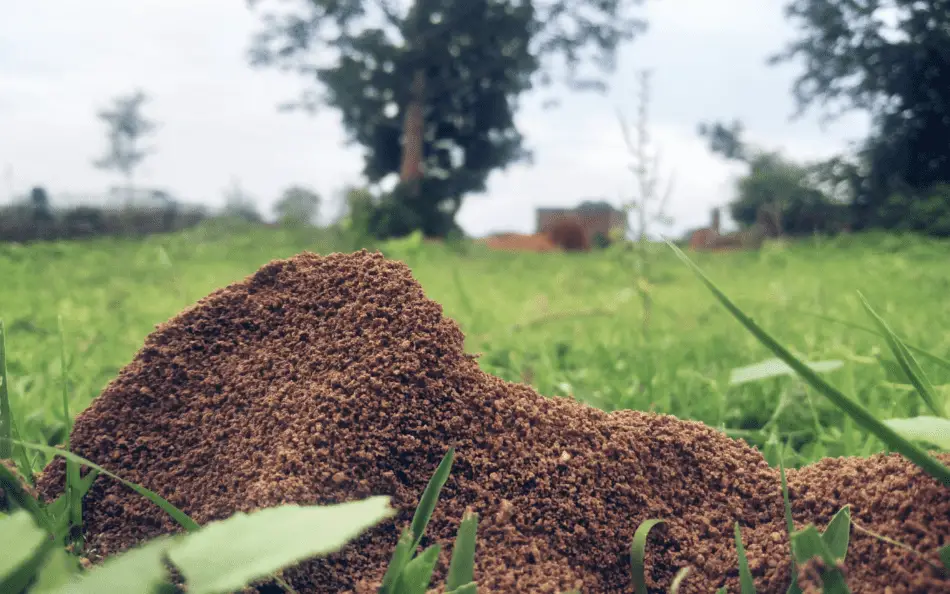
Anthills can quickly ruin the look of a clean lawn. Small mounds may seem harmless, but large colonies can spread fast and create dozens of dirt piles across your yard.
To get rid of anthills permanently, you must eliminate the ant colony—not just flatten the mound. Removing food sources, reducing moisture, and treating the nest directly are the most effective solutions.
Here’s how to handle anthills properly and prevent them from returning.
What Is an Anthill?
An anthill is simply the dirt ants push to the surface while digging underground tunnels. The colony itself lives beneath the soil, sometimes several feet deep.
Flattening the mound removes the visible problem—but not the ants.
Why Are There So Many Anthills in Your Yard?
Ants choose nesting sites based on three basic needs:
- Food
- Water
- Shelter
Your lawn may attract ants because of:
- Leaking sprinklers or poor drainage
- Pet food or trash nearby
- Aphids producing honeydew
- Dry, sandy soil (ideal for tunneling)
- Patchy or weakened grass
Multiple anthills may even belong to the same colony connected underground.
Can Anthills Damage Your Lawn?
In small numbers, ants actually help aerate soil. However, large infestations can:
- Damage grass roots
- Create tripping hazards
- Dull mower blades
- Attract stinging species like fire ants
If ants begin biting or stinging, action should be taken immediately.
How to Get Rid of Anthills Naturally
1. Rake Fresh Mounds Regularly
Flatten new mounds before they harden. While this doesn’t eliminate the colony, it prevents large soil piles from forming.
2. Remove Food and Water Sources
- Fix leaking hoses or irrigation.
- Empty standing water.
- Seal trash bins tightly.
- Clean outdoor eating areas.
Making your yard less attractive reduces colony expansion.
3. Use Diatomaceous Earth
Sprinkle food-grade diatomaceous earth around mound entrances. It damages ants’ outer layer and causes dehydration.
Apply only when dry weather is expected.
4. Citrus Oil Treatment
Mix citrus oil with water and mild soap. Pour directly into the mound openings to disrupt the colony.
This works best on smaller nests.
How to Eliminate an Ant Colony (Stronger Methods)
Boric Acid or Borax Bait
Mix boric acid or borax with sugar to create bait. Ants carry the mixture back to the colony, eventually poisoning the nest.
Important: Keep away from pets and children.
Commercial Ant Bait Stations
Slow-acting bait products allow worker ants to transport poison back to the queen.
This is often more effective than spraying surface insecticides.
When to Call a Professional
Consider professional pest control if:
- You suspect carpenter ants damaging wood.
- Fire ants are present.
- Nests are near foundations.
- Infestations persist despite treatment.
How to Prevent Anthills From Returning
- Maintain healthy, thick turf.
- Improve drainage in wet areas.
- Control aphids and garden pests.
- Remove debris piles and decaying wood.
Long-term prevention is more effective than repeated mound removal.
Final Thoughts
Anthills are a visible sign of underground activity. Flattening them is only temporary. The key is disrupting the colony by removing food, limiting water access, and applying targeted treatments.
With consistent lawn care and proper pest management, you can keep anthills under control and restore your yard’s appearance.