
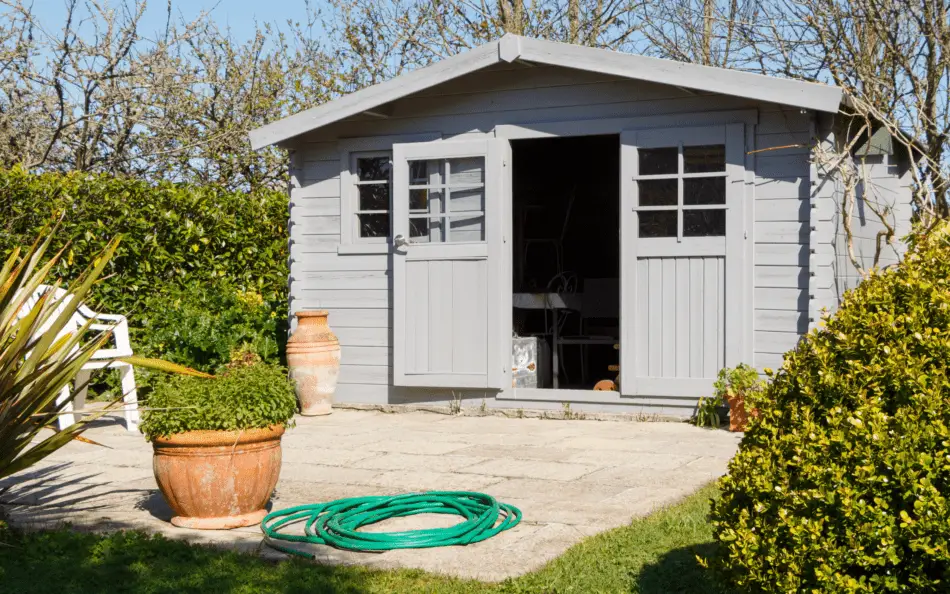
Sheds are great structures where we can store valuable items, crafts, machines, and equipment. Just like a house, a shed also needs proper ventilation and airflow to keep it cool and prolong its lifespan.
Some of the cooling tips for your backyard shed include using cooling effect roof ventilation, adding windows and doors, using an insulator to contain the heat, and glazing your windows. Practically, you can open the doors and windows of your shed when you’re using it. If you have extra money, you can also install some ceiling fans or an air conditioning unit.
In this article, we will discuss the ways to cool your backyard shed. Also, we will tackle some energy-saving tips to keep your uninsulated shed cool without using electricity. These tips will surely help you manage the airflow in your shed and keep it cool.
Tips to Keep Your Shed Cool
Summer is cruel to some people who don’t want sun exposure. Heat is one of the factors that could ruin your outdoor furniture, gathering, and other things, hence why some homeowners build or purchase sheds. Sheds are of great help in storing our crafts, materials, and equipment.
However, you must consider that sheds need a little break from the heat of the sun. To prolong a shed’s lifespan, you must keep it cool, especially if you store items that can be sensitive to heat.
Here are 11 tips to cool your backyard shed.
1. Use cooling effect roof vents
To keep your shed cool, use the natural cooling effect of roof vents. Roof ventilators come in two forms: wind ventilation and cross ventilation. These designs allow the heat to exit your shed, and thus, lower the temperatures inside. A wind ventilator is the most common design of roof vents.
Determine the perfect position of your windows, doors, and vents if you want the heat to exit your shed while providing you with a cooling system. In this way, you allow the air to properly circulate within your shed and control the wind that passes through.
2. Add insulator to contain heat
Adding insulation to your shed is another way to cool down your shed. Some might think that insulators are used to keep something warm, but a well-insulated shed keeps cool air in and warm air out. If you want your backyard shed to be cool, insulators are crucial.
The materials that make up your shed have insulating properties that are measured using the R-scale. Check the roof insulation of your shed to see if it is designed to protect the interior against heat. Here are different types of insulation that you can use to keep your shed cool:
-
Wall Insulation
This can help reduce your energy consumption.
-
Insulated Concrete Insulation
It is often used in non-residential structures or buildings.
-
Spray-on Insulation
You can adopt this kind of insulation for your shed in two different ways. You may either use an open-cell foam where air from the cells fills in the open space or closed-cell insulation.
-
Structural Insulated Panels
It is the most durable type of insulation and it is known to be an energy-efficient, high-performance, budget-friendly material.
Choose an insulator that is best suited for your shed. If your shed is not powered by electricity, you can use bubble wrap or polystyrene. And if you have extra money, you can invest in fiberglass wool or foil-backed compressed insulation. These insulators are widely available at Home Depot or in other home improvement stores.
Remember, before applying the insulation, treat the walls of your shed with an antifungal treatment to prevent mold build-up under the warm layers of your shed. You can also create a membrane that allows air to circulate properly and prevent moisture build-up by placing a plank between the walls and insulation.
Running out of place to store your gardening gear, backyard tools, equipment, crafts, and power supplies? Sounds like you need a backyard shed. This simple yet versatile structure can serve as storage, a work area, or even a crafting station. The question is: do you need a permit to build a backyard shed?
3. Add windows and doors
The most practical way of cooling your shed and improving ventilation is to add more windows and doors. You can also use screens to protect yourself from insects. You can add an awning or overhang roof if the heat still penetrates inside and to prevent sun rays from directly striking the side of your walls.
4. Glaze your windows
Glazing your shed windows helps slow down the heat, which is the result of contact with the sunlight. It also helps increase the circulation of a natural cooling breeze.
5. Install a ceiling fan for additional ventilation
To reduce heat inside, consider adding an exhaust fan or other cooling appliances. If you are worried about high electric bills, you can opt for solar solutions. Solar-powered fans are a great addition, and a solar panel on a shed’s roof can also provide free electricity.
6. Consider getting an air conditioning unit
Sometimes, fans are not suitable and applicable in some shed spaces for might just circulate hot air. Consider the location and purpose of your shed when opting for an air-conditioning unit, for it can either be the best approach for your shed or a bad addition.
7. Install a whirlybird
Another conventional way of cooling your shed is by installing a whirlybird. You can choose an active-powered whirlybird, often called mechanical whirlybird, or a wind-driven one.
With this device, when the wind hits the turbine fins, the vents rotate. Rotating will expel hot air, thereby cooling down your shed.
Whether you are getting a ready-made shed or building your own, one of the things that you have to consider is whether your structure will have windows or not. If you are still undecided, learn more about the pros and cons of installing windows in your shed before you make your decision.
8. Use skylight roofing design
Another option to cool your shed is the use of skylight roofing. You can redesign the skylight on your shed’s roof to avoid heat loss in the winter. You can use open-sided cylinders or mirrored reflectors designs that are adjacent and could provide daylight without enhancing heat.
This structure could provide you with natural lighting. Another design is operable skylights, which open outward from the bottom, releasing hot air in the ceiling while cooling down your shed.
9. Place your shed where natural shade is
If the suggested options don’t seem to work with your shed and it is still hot inside, you might want to reconsider its location. Relocate your shed in a shaded area but ensure that it is not under trees whose branches could break easily. This would substantially mitigate the exposure to the sunlight and provide a perfect background for some photographs.
However, if it’s impossible to move your shed, you can grow plants that will cover its roof, such as big leafy plants that will offer plenty of coverage.
10. Add solar reflective paint
If adding shade to your shed seems impossible for some reason, you may consider adding solar reflective paint to reduce the sun’s effect on your shed’s roof. Solar reflective paint will coat your shed’s roof, which will absorb the scorching sun rays. It is cheap, easy to apply, and looks appealing.
11. Be practical: Open the doors and windows
If you are a practical person, you might want to consider opening the doors and windows of your shed to allow heat to come out and let the cool breeze get in. Closing these pair passages can trap the interior temperature, so try to keep it open while you are using your shed.
Colors are also a big factor when cooling down your shed, so you might want to consider changing the colors of your shed if it is dark. Dark paint doesn’t reflect the heat, it absorbs it instead. Thus, choose a lighter paint.
There are a lot of things that you need to consider when you are building a shed in your backyard. Out of all the things that you need to decide on, the location of your shed is probably one of the most important decisions that you will need to make. To help you with this task, we’ll tell you the best places for your backyard shed.
Conclusion
Just like your house, it is important to keep your shed cool. Doing this will preserve all of the items that you are keeping inside your shed, especially the ones that are temperature sensitive. There are a lot of ways to cool your shed, you just need to find the cooling system that will work best for you.
To keep your backyard shed cool, you first have to consider its location. Then, you can choose the best method for cooling it down. It is also important to choose the method that works best in your environment. Although, keeping your shed cool doesn’t mean you have to compromise its style, type, and design.